Cataract surgery
Modern ophthalmology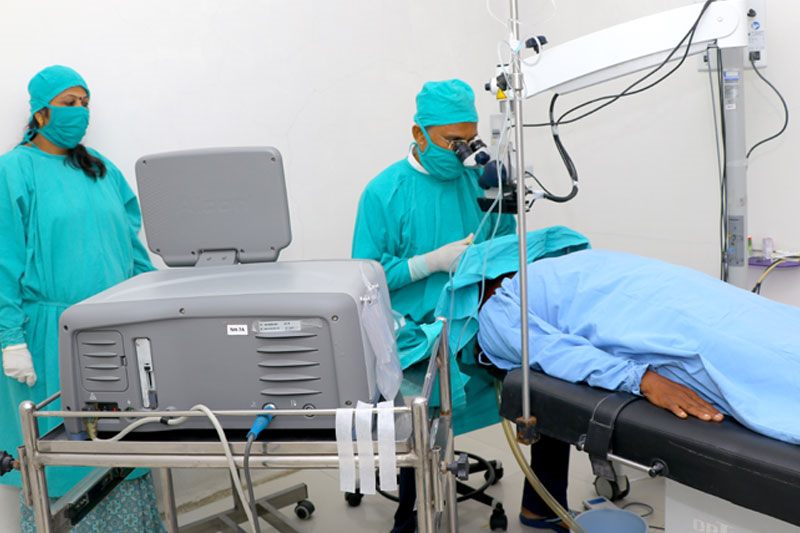
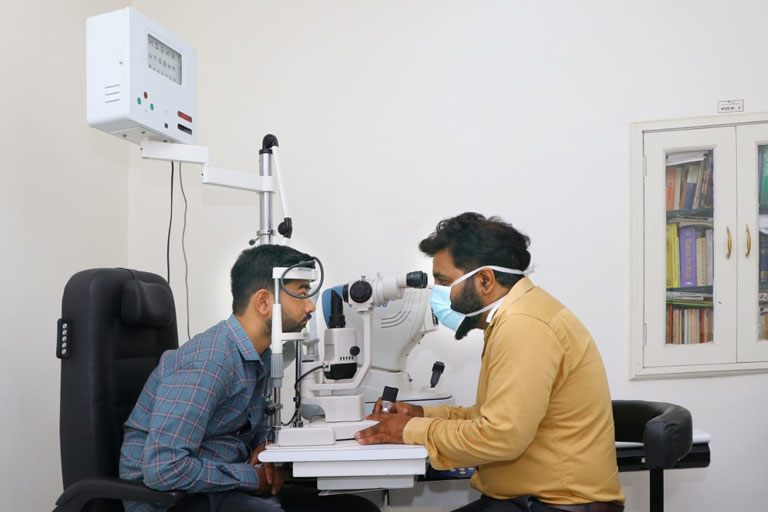
A cataract is the gradual clouding of the eye's natural lens. Vision becomes blurred, dim or full of glare, and colours fade. Surgery replaces the cloudy lens with a clear artificial lens (an intraocular lens, or IOL) — one of the most successful operations in medicine.
How we treat
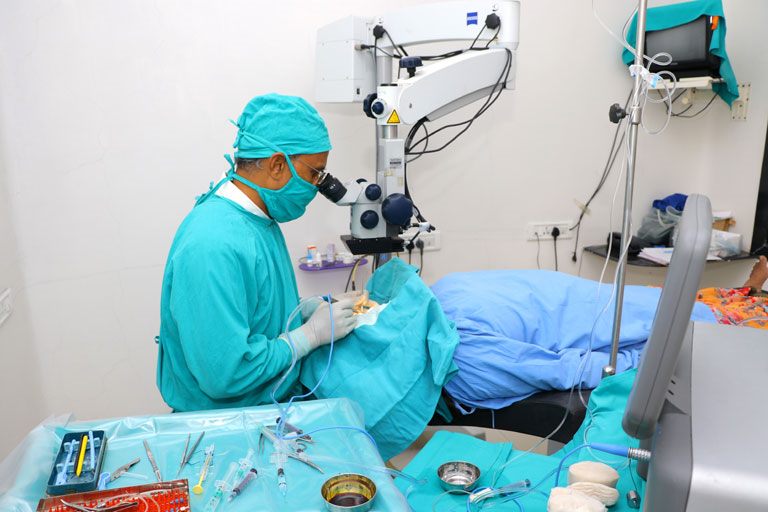
- Sutureless phacoemulsification through a tiny, self-sealing incision
- Manual small-incision surgery (SICS) when it suits your eye better
- Foldable lens implants: monofocal, multifocal, aberration-free and accommodative — options and costs explained before surgery
- Lens power calculated with SRK/T, Hoffer Q and Holladay formulas
- YAG laser capsulotomy if the lens capsule clouds later ("after-cataract")
- A surgical safety checklist — consent, sign-in and time-out — at every operation
Ayurvedic support
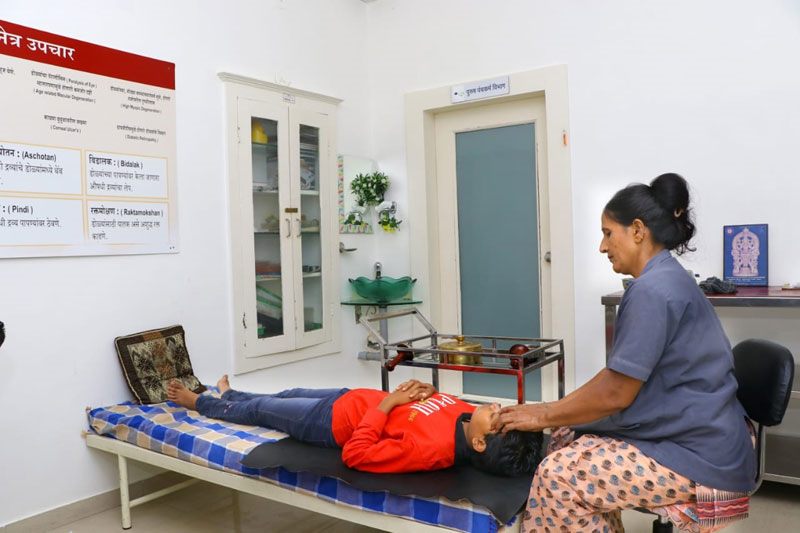
- Once your surgeon confirms the eye has healed, Netra Tarpana or Aschyotana may be suggested for dryness and comfort
- Diet and lifestyle guidance for long-term eye health
- Anaesthesia
- Local — usually drops or a small injection
- Hospital stay
- Day care — home the same day
- Time in Jalgaon
- About 7 days; final glasses check at home